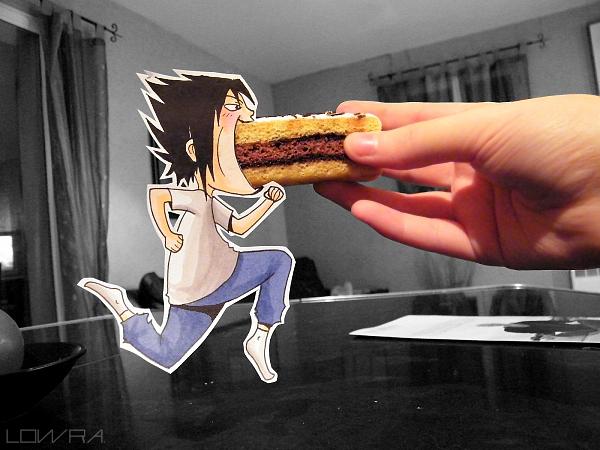
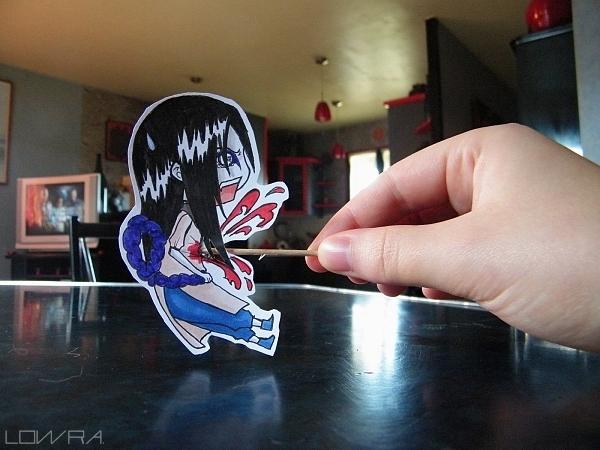
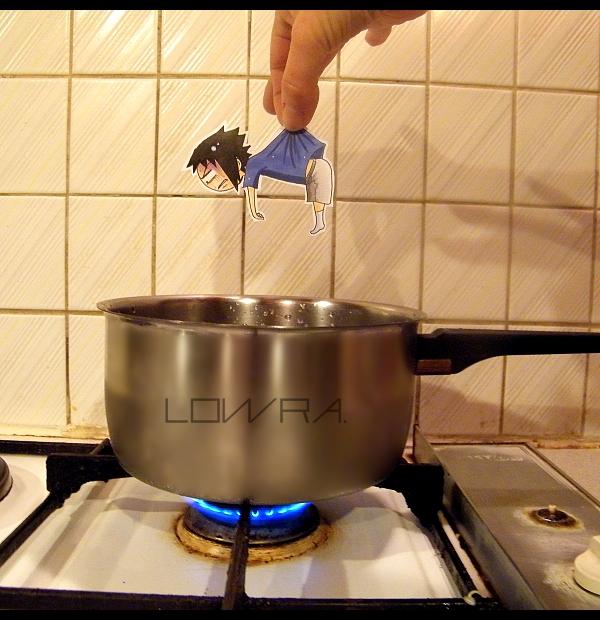
For her “Paperchild Revolution” collection, French artist Lowra makes cartoons of small kids with paper (a meme known as “paper child“) and creatively photographs them into real-life scenes. The results are clever and cute.



via

PETER MAX
Robert: Peter Max [laughs]... he's a totally fucking jive character. I read an article about him about ten years ago and he was doing these really bad, sloppy paintings, knocking 'em out as quickly as possible and trying to sell them based on his name. But you know, in the psychedelic era, his stuff was all over the place. He was way better known than I was, back in like '68, '69, '70 period. Yeah, Peter Max capitalized on the whole psychedelic art scene in that period; completely jive character. I wonder if he's still alive.
PETE SEEGER
Robert: Seeger… he's a saint. Pete Seeger's a fucking saint, but I never found his music very interesting. You know, musically he can play the banjo, but he's so political, so deeply, vehemently political — and I agree with his politics completely — but it made his music political; the message was more important than the quality of the music to him. He's a literary musician, you know? But he dedicated himself to getting out there an playing these left-wing, rousing songs to labor unions and strikers, it's amazing they never put him in jail. Well, actually, I think he was in trouble for a while but he never went to jail. Is he still alive? I think he is. I think he's still going! I know someone who recently talked to him and I guess Seeger is very inspirational. He's still very lucid and he talked about the old days. You know, he started all that political campaigning in the '30s, and he started very young with that. He's from an upper-class family with money. I think it was the Seeger family whose maid was Elizabeth Cotton, and one day they found her playing guitar and singing and they went, "Oh my God! This woman is a talented singer/musician!" Somebody, years ago, gave me, as a gift, a huge box set of ten LPs of all of that left-wing folk music done by the folknics, not by the real folk, but the folknics of the '50s and early '60s: the Almanac Singers; Joan Baez and Pete Seeger. It's just totally uninteresting. Real country hillbilly music by deeply ignorant, racist people is much more interesting than that stuff. As I said, I agree totally with their politics, but musically it's really uninteresting. The whole folknic scene, even when it was happening in the late '50s and early '60s, I was never moved by it. I preferred rockabilly.
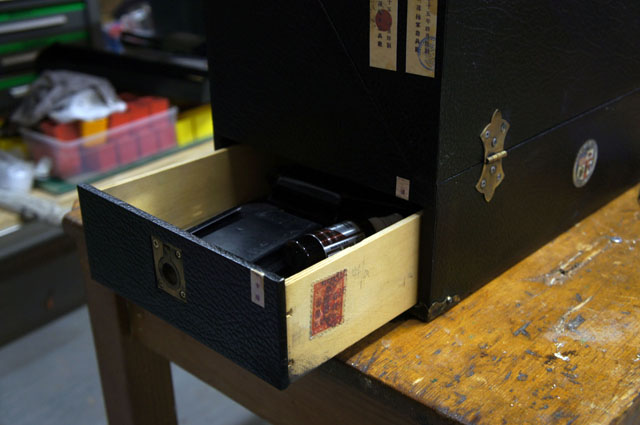
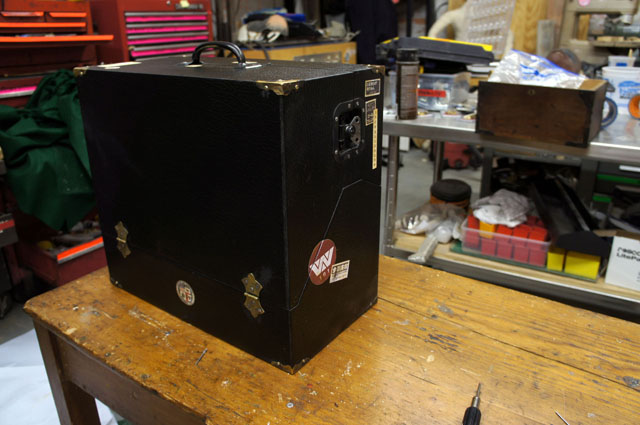
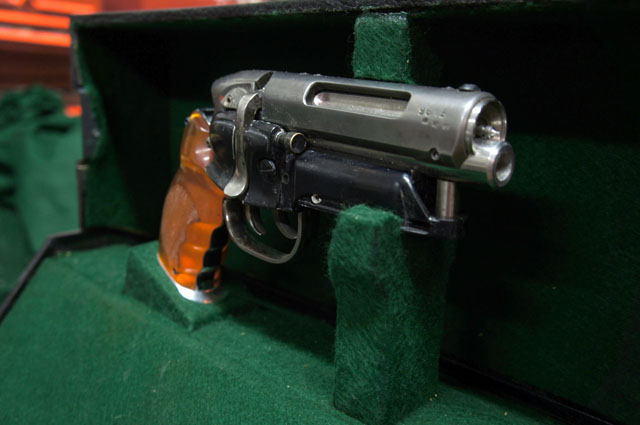
We spent seven hours in Adam’s shop watching him transform pieces of wood and metal into a beautiful carrying case for this beloved Blade Runner Blaster prop replica. The completed box is an amazing creation to behold!
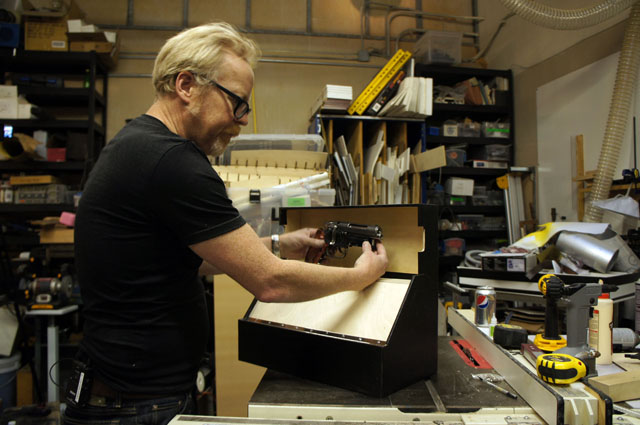

I was at my hackerspace one evening and we got to talking about crazy ideas, like normal. We have a full size Han Solo in Carbonite at the space, and someone mentioned that it'd be funny to encase old toys in a smaller carbonite box. So I did. I used the ShopBot CNC router at the MIT FablLab at CCBC in Catonsville, MD to cut the box, an arduino to copy code to an attiny85 to run the randomization script for the LED lights, and my MakerBot to 3d print the side panels I'd previously designed for a different project. The side panels are posted here on Thingiverse and I just drilled out holes for the lights
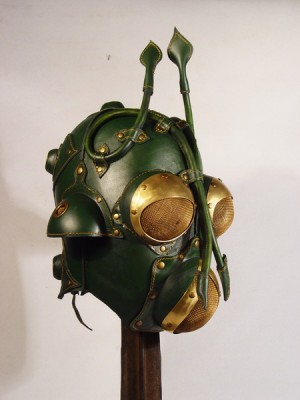
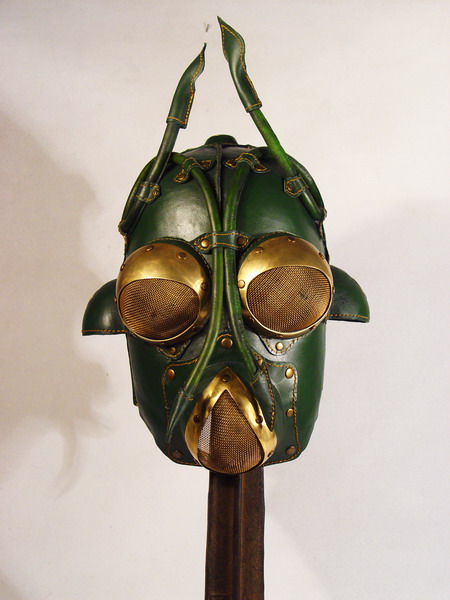 This insectile "Green Art Gas Mask" is quite a departure for Ukrainian leatherworkers

 In the arsenal of eternal skeptics there are few tools more dramatically and more commonly used than Ockham’s razor. It is triumphantly applied to resolve arguments about ghosts (more parsimoniously seen as misperceptions by distraught family members or the suggestible), UFOs (evidently hoaxes and mistaken observations of natural phenomena) and telepathy (a “delusion” of wishful thinking and poorly-constructed tests).
Born in England, Franciscan monk William of Ockham (c. 1287–1347) is among the most prominent figures in the history of philosophy during the High Middle Ages. The Skeptics Dictionary quotes the Razor as Pluralitas non est ponenda sine necessitate, or “plurality should not be posited without necessity," while Wikipedia defines Ockham's razor as follows:
In the arsenal of eternal skeptics there are few tools more dramatically and more commonly used than Ockham’s razor. It is triumphantly applied to resolve arguments about ghosts (more parsimoniously seen as misperceptions by distraught family members or the suggestible), UFOs (evidently hoaxes and mistaken observations of natural phenomena) and telepathy (a “delusion” of wishful thinking and poorly-constructed tests).
Born in England, Franciscan monk William of Ockham (c. 1287–1347) is among the most prominent figures in the history of philosophy during the High Middle Ages. The Skeptics Dictionary quotes the Razor as Pluralitas non est ponenda sine necessitate, or “plurality should not be posited without necessity," while Wikipedia defines Ockham's razor as follows:
“Among competing hypotheses, the one that makes the fewest assumptions should be selected.”And it gives the following example of its application:
Brother Ockham, however, said nothing of the kind. Later philosophers have put these words into his mouth for their own convenience. Here is what he wrote, according to the Stanford Encyclopedia of Philosophy:“It is possible to describe the other planets in the Solar System as revolving around the Earth, but that explanation is unnecessarily complex compared to the contemporary consensus that all planets in the Solar System revolve around the Sun.” Another often-quoted formulation of the principle is that “one should not multiply entities beyond necessity.”
“Nothing ought to be posited without a reason given, unless it is self-evident or known by experience or proved by the authority of Sacred Scripture.”So let’s come back to the planets, and apply Ockham’s razor–as formulated by the man himself–to a comparison between two different hypotheses about their motion. The contemporary consensus states that they revolve around the sun according to the Copernican system, Kepler’s laws of motion and Newton’s model of gravity, as demonstrated by complex observations and significant mathematical underpinning.
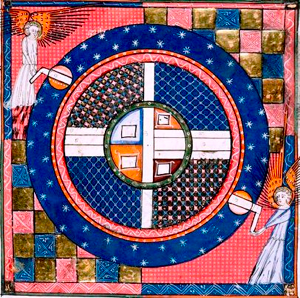 Our alternative hypothesis simply states that they are moved around the sky by angels, as illustrated in this beautiful painting from the Breviari d’amor of Matfre Ermengaud, where a convenient gear mechanism is gracefully activated to regulate planetary motion. Ermengaud was a contemporary of Ockham and, like him, a Franciscan friar.
Were we to apply Ockham's formulation of the razor literally, the choice between these two hypotheses is clear. It does not favor the first hypothesis, the standard scientific interpretation. The Scriptures clearly state that angels do exist, and their reality was re-affirmed by Pope John Paul II as recently as August 1986. Since they manifest through their actions in the heavens, the second hypothesis appears far more parsimonious and elegant than the complicated rationalizations used by mathematicians and astronomers, which involve unseen entities such as the acceleration of gravity, centrifugal force, and mass, which - to this day - raise issues that science is yet to resolve. If you seriously believe in angels, then the contemporary consensus about planetary motion is a case of “plurality without necessity.”
The second hypothesis is also more powerful since angels can just as easily move the planets around the earth as around the sun. They can do whatever they like—and thereby explain any phenomena.
Perhaps we should be more careful when we quote ancient authors out of context, or twist their words to fit the convenient modern tenets of skepticism in the name of Reason. The Scriptures are full of ghosts, UFOs and examples of telepathy - which means that such phenomena cannot be dissected and thrown out using Ockham’s razor anyway.
We know, of course, that the planets revolve around the Sun, an idea that would have shocked Ockham. And I firmly believe that, in philosophy and in science we should go on selecting the hypothesis that makes the fewest assumption when confronted with competing explanations, and one should not multiply entities beyond necessity -- even if Brother William never said so.
But we should also remember that nature is not parsimonious at
Our alternative hypothesis simply states that they are moved around the sky by angels, as illustrated in this beautiful painting from the Breviari d’amor of Matfre Ermengaud, where a convenient gear mechanism is gracefully activated to regulate planetary motion. Ermengaud was a contemporary of Ockham and, like him, a Franciscan friar.
Were we to apply Ockham's formulation of the razor literally, the choice between these two hypotheses is clear. It does not favor the first hypothesis, the standard scientific interpretation. The Scriptures clearly state that angels do exist, and their reality was re-affirmed by Pope John Paul II as recently as August 1986. Since they manifest through their actions in the heavens, the second hypothesis appears far more parsimonious and elegant than the complicated rationalizations used by mathematicians and astronomers, which involve unseen entities such as the acceleration of gravity, centrifugal force, and mass, which - to this day - raise issues that science is yet to resolve. If you seriously believe in angels, then the contemporary consensus about planetary motion is a case of “plurality without necessity.”
The second hypothesis is also more powerful since angels can just as easily move the planets around the earth as around the sun. They can do whatever they like—and thereby explain any phenomena.
Perhaps we should be more careful when we quote ancient authors out of context, or twist their words to fit the convenient modern tenets of skepticism in the name of Reason. The Scriptures are full of ghosts, UFOs and examples of telepathy - which means that such phenomena cannot be dissected and thrown out using Ockham’s razor anyway.
We know, of course, that the planets revolve around the Sun, an idea that would have shocked Ockham. And I firmly believe that, in philosophy and in science we should go on selecting the hypothesis that makes the fewest assumption when confronted with competing explanations, and one should not multiply entities beyond necessity -- even if Brother William never said so.
But we should also remember that nature is not parsimonious at 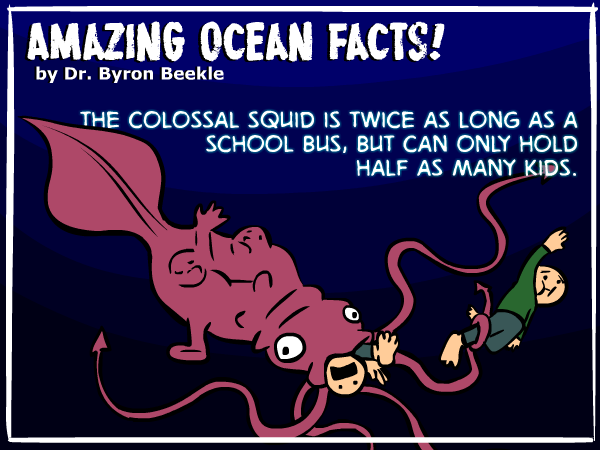
“We have unfortunately ceased production of “Amazing Ocean Facts” due to artistic disagreements with Dr. Byron Beekle. We appologize to his fans.“
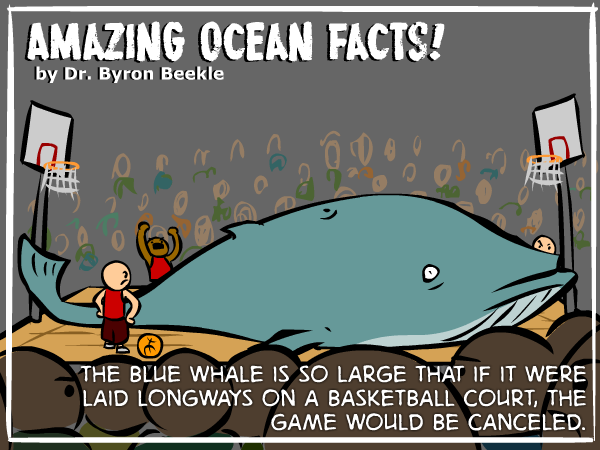

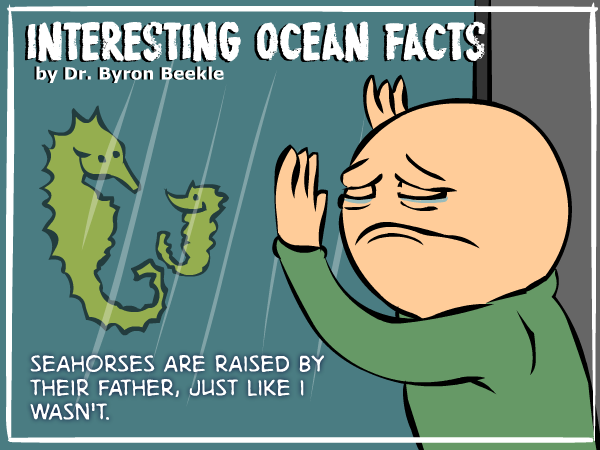
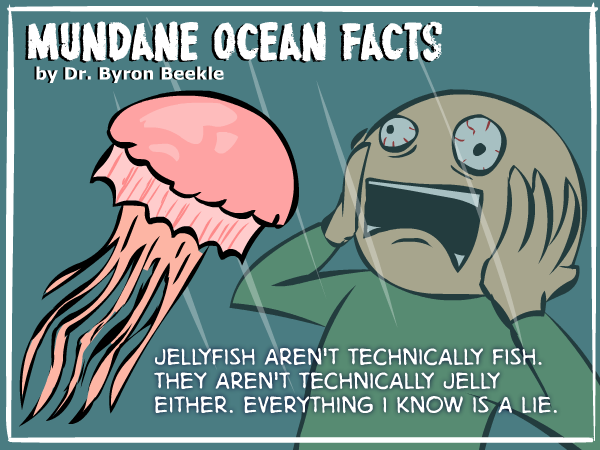
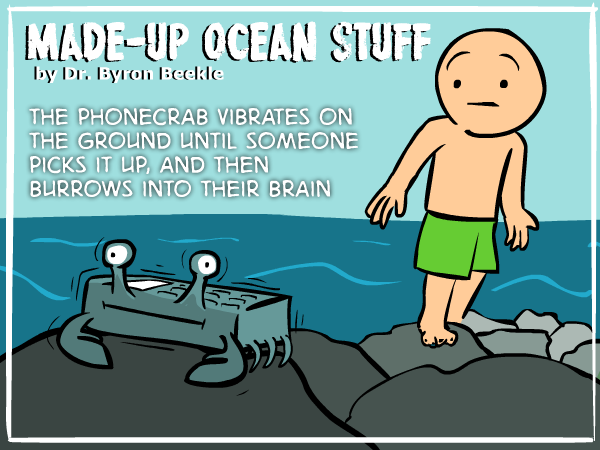
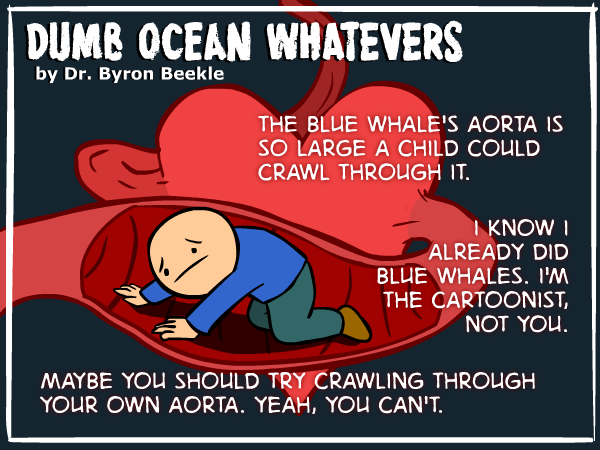
“We have unfortunately ceased production of “Amazing Ocean Facts” due to artistic disagreements with Dr. Byron Beekle. We appologize to his fans.“
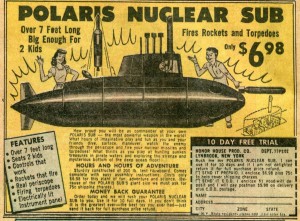 "Polaris Nuclear Sub," offered in the Spiderman Comics March 1967 Issue. As shared on Flickr by SenseiAlan. I love those old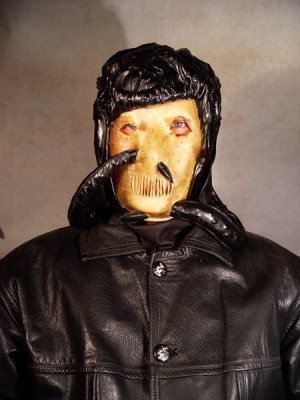
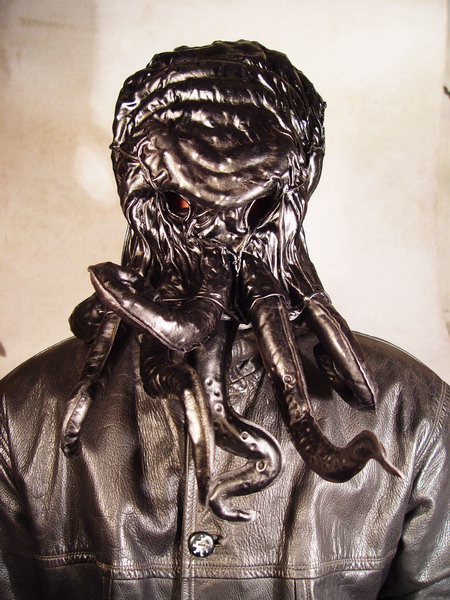 The wonderful Ukrainian horror/fetish/steampunk mask maker Bob Basset has produced a two-faced Cthulhu mask; on one side, the betentacled visage; on the other, a lecterine horror





Andrew McConnell conceived of this system as a modular set of components that can be deployed in a spiral, each element supporting the next – the only variation would occur in the top and bottom pieces that connect to landings. ...From the designer: “Inspired by the spine of a whale, the Vertebrae Staircase is not simply mimicry of organic form but an exploration in shaping structure. Much of the design work went into refining the single component, or vertebra, that mate with each other creating a unified spine running from floor plate to floor plate. These interlocking vertebrae provide a rigid structure for the steps, railing and its users. And the railing is reinforced by connections that help the staircase resist rotational forces caused by the cantilevered steps.”
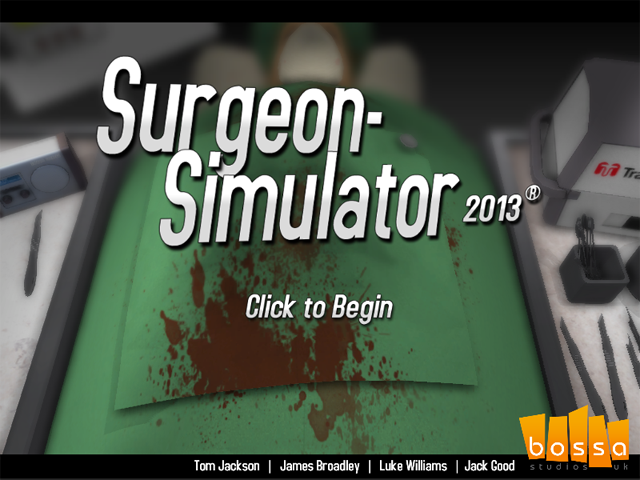
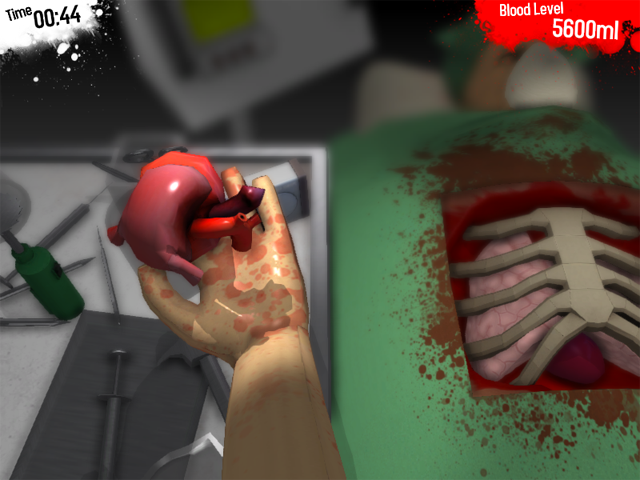
You are Nigel Burke… an ordinary guy, with no outstanding skills. Somehow forced to perform a heart transplant, using any tools available. Complete the operation in the quickest time possible, with minimal blood loss! Features Revolutionary 1 to 1 finger manipulation control system Realistic surgical tool physics. Professional voice acting. Thumping soundtrack. This is, Surgeon Simulator 2013.

 Karswell