Artist Philippe Handford turned trees that had been illegally cut down in a forest in Northwest England into a pair of beautiful sculpture installations for the 2012 Pendle Sculpture Trail. In the sculpture “Reconnected 1,” Handford connected a tree back to its stump with a spine-like armature of cross-sectioned logs. In “Reconnected 2,” Handford connected a cluster of four tree stumps with two cross-sectioned log arches. The Pendle Sculpture Trail marked the 400th anniversary of the trials and executions of the Pendle witches.
Vessel is a limited edition carbon fiber bathtub with a swoopy design based on a hammock. Designed by Splinter Works in the U.K., the nine-foot-long bathtub is suspended above the floor by wall brackets. It is available in a variety of colors including classic carbon fiber black, pink, and silver. Your bath is ready, Mr. Bond.
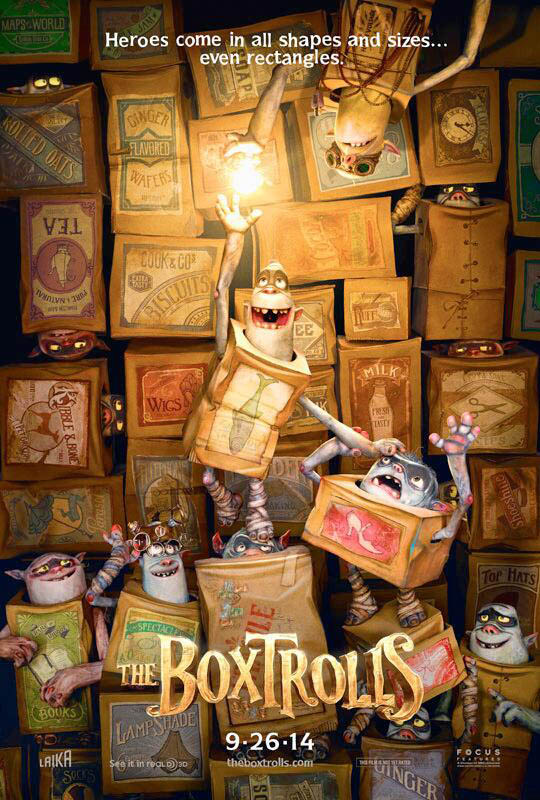
Portland, Oregon-based Laika, the animation studio behind Coraline and ParaNorman, have announced their third animated feature film titled The BoxTrolls. The film opens in theaters on September 26, 2014 and its trailer is available to view at iTunes Movie Trailers. It will be directed by Anthony Stacchi and Graham Annable.
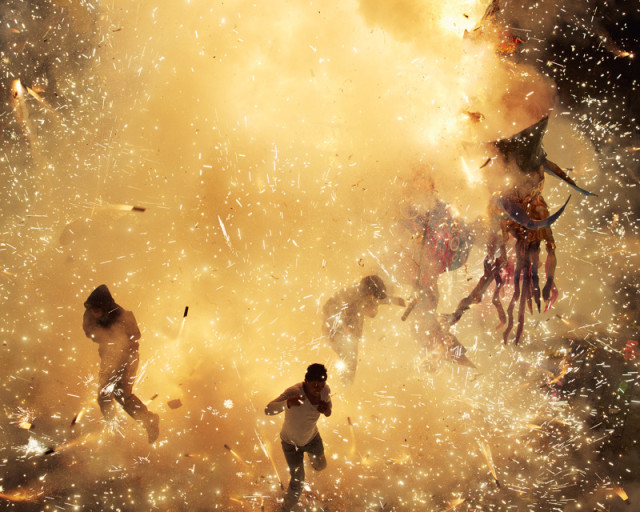
The jaw-dropping photo series “Tultepec” by Thomas Prior documents the fireworks-fueled chaos of the 2013 National Pyrotechnic Festival in Tultepec, Mexico. The nine-day festival celebrates the main industry of Tultepec—handmade fireworks—through firework competitions, a parade of pyrotechnic bulls, and apparently, loads of fireworks in the streets.
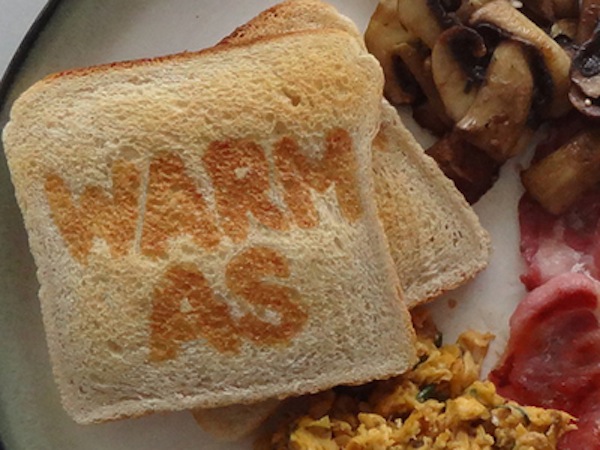
In her photo series “_____ as _____,” designer Christine Kawasaki-Chan visualizes food idioms like “cool as a cucumber” using lettering made out of actual food items. Check out her Dribbble page for more of her photography.
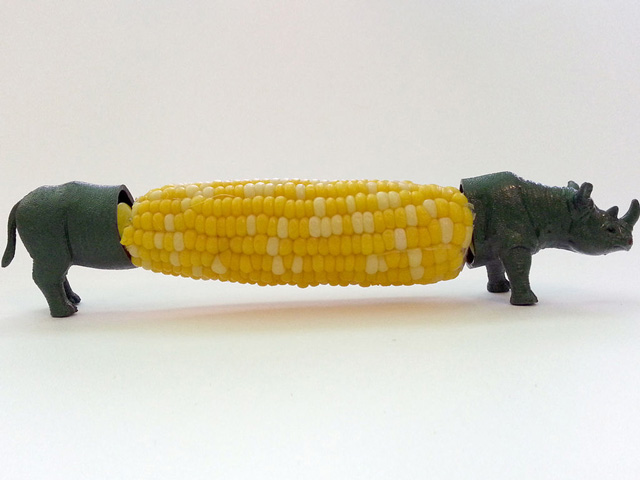
Using cheap plastic animal toys, Instructables’ play editor and community manager Mike Warren created super cute corn on the cob holders. He even cleverly designed the holders to reconnect when not poking corn (tutorial).
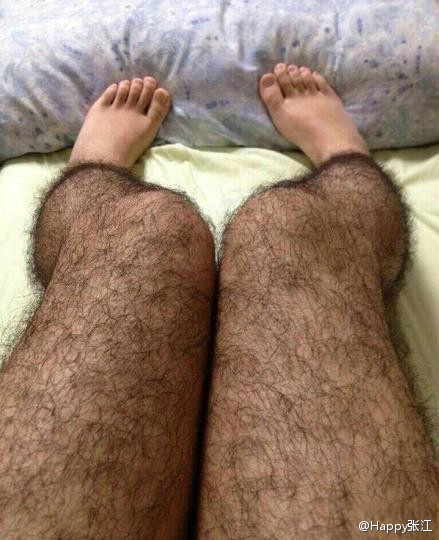
ChinaSMACK is reporting that a user on China’s microblogging site Sina Weibo has invented “hairy stockings” as a way for young girls to fend off perverts. It’s hard to tell if these are real or imagined but given that some people in China have been putting dogs in pantyhose, these might just be the former.
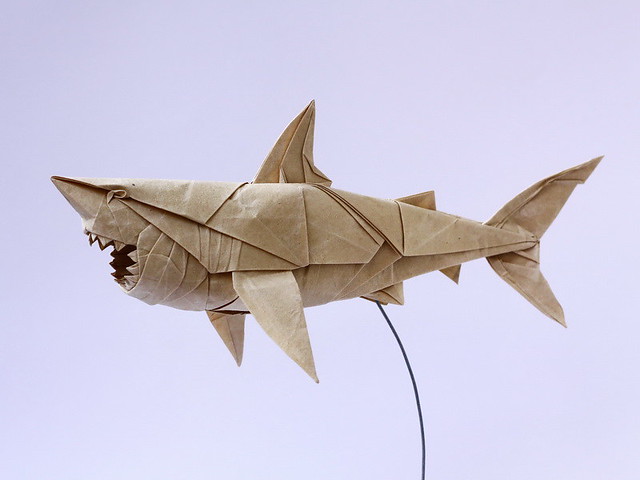
Vietnamese artist Cuong Nguyen creates beautiful origami animal sculptures out of single sheets of paper. Nguyen’s style varies between exacting detail and minimalism, and he has crafted his favorite subjects—gorillas and scorpions–in many different styles over the years. For more on Nguyen’s work, see his interview with All Things Paper.
Today's XKCD What If? explores many of the benefits that would accrue to the human race if the Sun were suddenly extinguished.
Reduced risk of solar flares: In 1859, a massive solar flare and geomagnetic storm hit the Earth.[1] Magnetic storms induce electric currents in wires. Unfortunately for us, by 1859 we had wrapped the Earth in telegraph wires. The storm caused powerful currents in those wires, knocking out communications and in some cases causing telegraph equipment to catch fire.[2]
Since 1859, we've wrapped the Earth in a lot more wires. If the 1859 storm hit us today, the Department of Homeland Security estimates the economic damage to the US alone would be several trillion dollars[3]—more than every hurricane which has ever hit the US combined.[4] If the Sun went out, this threat would be eliminated.
Improved satellite service: When a communications satellite passes in front of the Sun, the Sun can drown out the satellite's radio signal, causing an interruption in service.[5] Deactivating the Sun would solve this problem.
Better astronomy: Without the Sun, ground-based observatories would be able to operate around the clock. The cooler air would create less atmospheric noise, which would reduce the load on adaptive optics systems and allow for sharper images.
Stable dust: Without sunlight, there would be no Poynting–Robertson drag, which means we would finally be able to place dust into a stable orbit around the Sun without the orbits decaying. I’m not sure whether anyone wants to do that, but you never know.
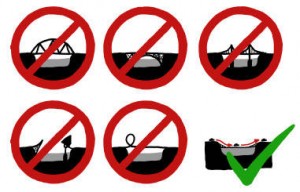
Reduced infrastructure costs: The Department of Transportation estimates that it would cost $20 billion per year over the next 20 years to repair and maintain all US bridges.[6] Most US bridges are over water; without the Sun, we could save money by simply driving on a strip of asphalt laid across the ice.
Alan sez, "Who wouldn't want their very own cyborg roach? And who wouldn't want to be able to control that cyborg from their mobile? Fund this Kickstarter and maybe you can. The robo-roach - manufactured in a hackerspace, like you do - is intended to serve as a high school science experiment. However, if you think that's what most people are going to use it for then you have not met nearly as many fratboys and office pranksters as I have
Last October, IGN's Brian Altano announced a bold design fiction: an imaginary line of "Han Solo in Carbonite" Pop-Tarts. Several months have gone by and this is still not a thing. The world is broken
“All the Young Dudes,” glam rock’s rallying cry, turned 40 last year. David Bowie wrote it, but Mott the Hoople owned it: their version was, and will ever remain, glam’s anthem, a hymn of exuberant disenchantment that also happens to be one of rock’s all-time irresistible sing-alongs.
Bowie, glam, and “All the Young Dudes” are inseparable in the public mind, summoning memories of a subculture dismissed as apolitical escapism, a glitter bomb of fashion and attitude that briefly relieved the malaise of the '70s.
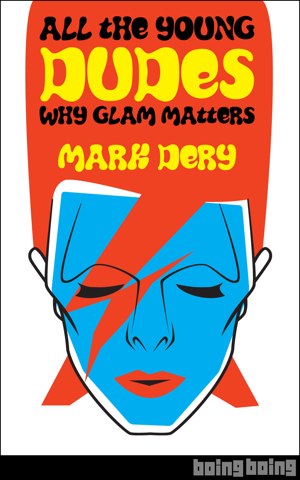
Now, cultural critic Mark Dery gives the movement its due in an 8,000-word exploration of glam as rebellion through style, published as a Kindle e-book (and Boing Boing's first published e-book): All the Young Dudes: Why Glam Matters. As polymorphously perverse as the subculture it explores, “All the Young Dudes: Why Glam Matters” is equal parts fan letter, visual-culture criticism, queer theory, and true confession.
In bravura style, Dery teases out lines of connection between glam, the socioeconomic backdrop of the '70s, Oscar Wilde as a late-Victorian Ziggy Stardust, the etymology and queer subtext of the slang term “dude,” the associative links between the '20s-style cover of the Mott album on which “Dudes” appeared and the coded homoeroticism of the '20s magazine illustrator J.C. Leyendecker (considered in the context of the 1970s fad for all things 1920s), and Dery’s own memories of growing up glam in '70s San Diego, where coming out as a Bowie fan -- even for straight kids -- was an invitation to bullying.
Glam emboldened kids in America and England to dream of a world beyond suburbia’s oppressive notions of normalcy, Dery argues, a world conjured up in pop songs full of Wildean irony and Aestheticism and jaw-dropping fashion statements to match. More important, glam drew inspiration from feminism and gay liberation to articulate a radical critique of mainstream manhood---a pomosexual vision of masculinity whose promise remains only partly fulfilled, even now.
The trailers for the upcoming Man of Steel pose plenty of questions about Superman’s long-awaited return to the big screen: Did Pa Kent really just say that it might have been better if Clark had let those kids die? Are the Kryptonians invading in those giant machines? Does Lois get to call him Superman at all? But one question looms over all others: What is Superman doing with a beard in some scenes?
We know that he loses the beard before too long — we see him in the Superman costume clean-shaven, after all. But that presents yet another question: How does a man who is invulnerable actually shave? Wouldn’t his facial hair be as invulnerable as the rest of him? To answer that question, Gillette has turned to a team of experts for their analysis with a video series, launching today, called How Does He Shave?
Among the experts offering their theories will be Kevin Smith, Mayim Bialik (A real-life neuroscientist as well as regular on CBS’ The Big Bang Theory) and Bill Nye, self-proclaimed science guy. The series launches, however, with the MythBusters team of Adam Savage and Jamie Hyneman, who talked to Wired about analyzing the Man of Steel’s personal grooming routine.
“We ponder the impossible all the time, but on the show we only really deal with the probable/improbable, said Savage. “The mythology of superheroes and the physics involved are a whole ‘nother thing, and they’re a fun category to let your imagination run wild.”
Or, as it turns out, kind of wild. “Superman, while he is fictional, is pretty mainstream,” Hyneman pointed out, and Savage agreed: “We all instinctively understand the ground rules, and thus when we fly far from our current reality in ideating what might or might not be possible in this alternate universe in which Kal-El exists, we have a verbal shorthand with the public already in place. It makes it like a license to fly far from reality, while still hewing to much of what we already know — the way comic books do.”
As it turns out, comic books have already tried to answer the question of Superman’s shaving techniques, with a 1980s issue of Superman suggesting that heat vision and a mirror does the trick. “The heat vision and mirror is pretty much the first thing that everyone comes up with for Superman’s shaving,” Savage said. “That and Kryptonite shaving cream. Those were our first two as well.”
Although the theories that ended up in the video are somewhat out there, the theories that the duo discarded were even more outrageous. “I had thought that shaving with Occam’s razor would be clever,” Hyneman admitted, “but then that leads to all sorts of philosophical questions that would perhaps be perplexing to someone just interested in having a good shave.” According to Savage, that was far from Hyneman’s only unexpected solution. “Jamie was thinking that perhaps he might fly back in time to when he didn’t have a beard but that solution is fraught with paradoxical contradictions,” he explained. “Can’t have Superman fighting General Zod as a mid-pubescent teen who’s all powerful. That would be weird.”
As weird as the suggestions that did make the cut? Judge for yourself — Jamie and Adam’s video is below:
Theories from Nye, Smith and Bialik are already available at HowDoesHeShave.com, where you can also vote for your favorite theories so far, or even share your own. Considering everything that Superman does for us, helping him stay clean-shaven really seems like the least we could do, doesn’t it?
Michele Bachmann Is Done: Her Hostage Tape to Reality
The congresswoman who represented the worst of American politics will not seek reelection in 2014. John Avlon on Michele
Rep. Michele Bachmann (R-MN), pictured at a GOP picnic in August 2011 in Humboldt, Iowa, will not run for reelection. (Chip Somodevilla/Getty)
Well, that’s overstating it. But the congresswoman who represented the worst of modern American politics more than she ever tried to represent her Minnesota constituents has announced that she will not run for reelection.
Michele Bachmann is done.
Smiling stiffly through an eight-and-a-half-minute video on her website, Bachmann again illustrated the palpable strangeness—the earnest, fact-free, Kool-Aid chugging self-obsession—that characterized her congressional career and her rolling disaster of a presidential campaign.
In her 'hostage video to reality,' Michele Bachmann announced that she would not seek re-election.
She wants the world to know that “this decision was not impacted in any way by the recent inquiries into the activities of my former presidential campaign or my former presidential staff. It was clearly understood that compliance with all rules and regulations was an absolute necessity for my presidential campaign.”
In a word: bullshit. The Office of Congressional Ethics investigation into her presidential campaign that was first disclosed by The Daily Beast is due to release its initial report soon. If it looked like Bachmann would be vindicated, she would have persisted in running for a congressional seat that had been gerrymandered to increase of her chances of representing a state that looks primed to easily reelect Al Franken to the Senate. This decision smacks of lawyer’s counsel—get out now before the boom comes down, and perhaps people will listen to your final signoff.
There is, inevitably, a rambling quality to an eight-and-a-half-minute monologue. This is Bachmann's hostage video to reality. The staff decision to back her vocal track with faint Springsteenesque music was a tell—the video would have seemed ever odder without it. Bachmann was at turns defensive and defiant and bucket-list ticking, talking about her excitement at taking a plane to London to attend Margaret Thatcher’s funeral, her co-sponsorship of the 37th attempt to overturn Obamacare (“which passed in the House”), and her philosophically contradictory commitment to bring federal tax dollars to her district to build a regional airport and rebuild a bridge. Note to Bachmann: you didn’t build that.
Relive Michelle Bachmann's most outrageous moments.
Over her eight years in congress, Bachmann quickly achieved notoriety because of her cavalier disregard of facts (her staff told me she gets most of her information from WorldNetDaily) and her impulse to play mini-McCarthy (routinely accusing political opponents of being anti-American) and then turn around and play the victim card to raise millions of dollars online from a national conservative populist base that saw her as plan B to Sarah Palin.
There is an impulse at the end of things to search for a redeeming quality, a handshake even between opponents for past battles well fought—and no doubt by midday someone will be offering a Slate pitch to go alongside the glossy partisan media farewells. But without attempting to characterize her personal life, the way Bachmann chose to use her time at the podium of public service was a disgrace.
She degraded national debate, consistently chose fearmongering over facts, and exhibited every impulse of the demagogue and the ideologue. If she ever bothered to do her homework, she could have been dangerous. Instead Bachmann will stand as a sad cautionary tale, a curious footnote used to explain the reality-show auditions of the 2012 GOP presidential primaries, now all part of her reel tape as she attempts to get what she always really wanted: a Fox News contract.
Like The Daily Beast on Facebook and follow us on Twitter for updates all day long.
John Avlon is political director for Newsweek and The Daily Beast. A CNN contributor, he won the National Society of Newspaper Columnists’ award for best online column in 2012.
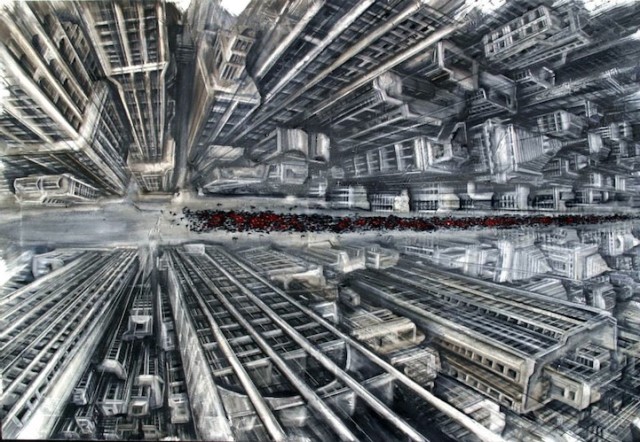
In the painting series “Vertigo,” cities are seen from high above in a dizzying downward fish-eye perspective. The paintings are by Milan-based artist Fabio Giampietro. For more of his work, see his Facebook page.

















 I grew up in the South, and I know all about "not racist" white people who use that racist slur against black people, but "only the bad ones." Guess what. Those
 Actor James Gandolfini, 51, has died of what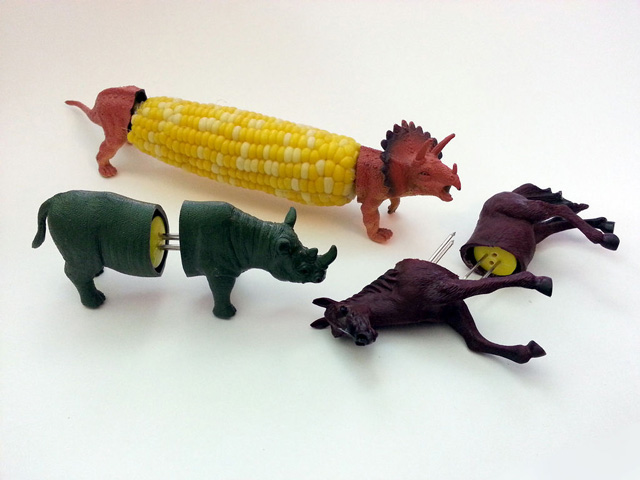


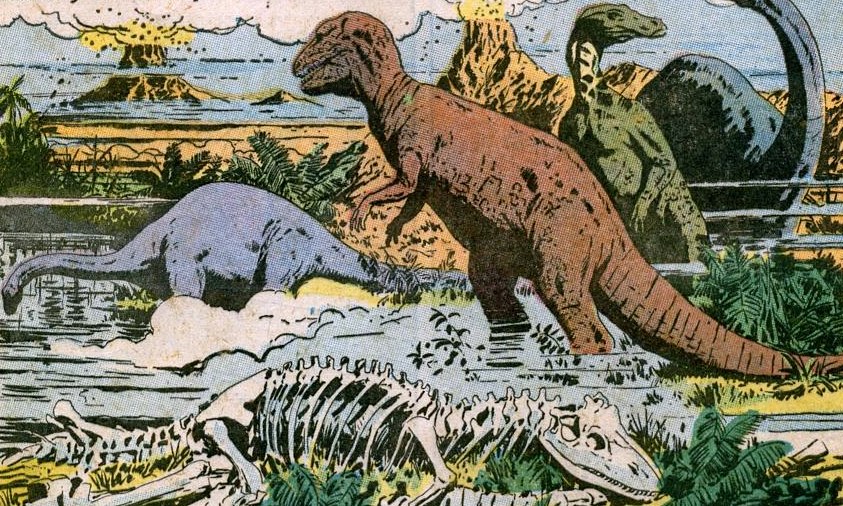 Charles Darwin, Linus Pauling, and Albert Einstein made great contributions to science. They also made large blunders. In this original essay Mario Livio, astrophysicist at the Space Telescope Science Institute, and author of the new book