Warp drive technology, as described in Star Trek, is nonsense, but there might actually be something to the idea of "warp drive" as a concept, says theoretical physicist Lawrence Krauss.
Coming to Kindle and Smashwords

November 2013
Apr 6, 2011
warp drive concept feasible....
Warp drive technology, as described in Star Trek, is nonsense, but there might actually be something to the idea of "warp drive" as a concept, says theoretical physicist Lawrence Krauss.

Apr 5, 2011
George R.R. Martin Picks His Favorite Science-Fiction Films of All Time...
Forbidden Planet (1956)

The Tempest on Altair IV. The only science-fiction film that William Shakespeare ever wrote (admittedly with some help from screenwriter Cyril Hume). The Bard of Avon and Robby the Robot make a combination that has still yet to be surpassed. Leslie Nielsen plays Captain Kirk a decade before William Shatner, and does it better. In fact, the C-57-D and its command trio of captain, first officer, and doctor are clear forerunners of the Enterprise and its Kirk/Spock/Bones triad, though none of Kirk’s myriad love interests could hold a candle to Anne Francis as the sexy yet innocent Altaira. It’s Walter Pidgeon who steals the film, however. His layered portrayal of the tormented Morbius is almost… well… Shakespearean. And did I mention Robby the Robot? Forbidden Planet was his first film role, but Robby went on to make numerous appearances in other movies and television episodes, a career that R2D2, C3PO, and Robocop can only envy. Forbidden Planet’s visuals and special effects were state of the art in their day, and still hold up pretty well… especially the sequence where the invisible Id monster gets caught in the disintegrator beams. The score was also amazing and unique, done in electronic tonalities that remain as unsettling as they were revolutionary. I hear rumors that they are going to remake this. Please, no.
ALIENS
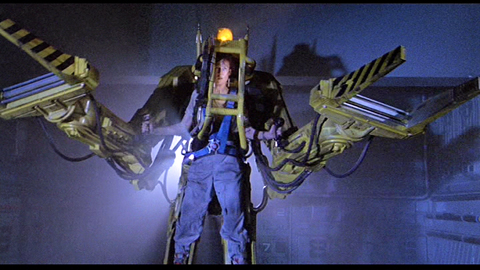
Once upon a time, Robert A. Heinlein wrote a classic (and controversial) science-fiction novel called Starship Troopers, which is still being read and argued about today. Many years later, director Paul Verhoeven and writer Edward Neumeier made a very bad film called Starship Troopers. Fortunately RAH was dead by then and never had to see it. In between, James Cameron made Aliens. According to Hollywood legend, when Cameron heard that they were going to film Starship Troopers, he said, “Why bother? I’ve done it.” And, you know, he had. His film was not based on the novel Starship Troopers, of course, but his Colonial Marines come a lot closer to the spirit and feel of Heinlein’s Mobile Infantry than anything in the Verhoeven movie, while still remaining true to the Alien franchise. Aliens is one of the rare cases of a sequel that was actually better than the original (no mean trick here, since the original was pretty damned good). This is probably Sigourney Weaver’s best turn as Ripley, though all of them were good. Her supporting cast was great as well: Hicks (Michael Biehn), Vasquez (Jenette Goldstein), the heroic android Bishop (Lance Henriksen), and especially Newt, as played by Carrie Henn. “Will I dream?” Newt asks Ripley in the last scene of the film, just before they settle down into their capsules for a long, cold sleep. “Yes” would be my answer. If they ever put me in charge of the franchise, the next Alien film will open with Newt waking up safe on Earth, having dreamed all those later, awful Alien movies.
Blade Runner (1982)
Poor Philip K. Dick. One of the true geniuses of science fiction, he struggled all his life to find an audience, and never had two nickels to rub together. Then, after he dies, he gets discovered by Hollywood, and film after film after film follows. Total Recall, A Scanner Darkly, Minority Report, The Adjustment Bureau, and more on the way. But Blade Runner was the first Dick film and remains the best. Based on Dick’s novel Do Androids Dream of Electric Sheep?, with a title borrowed from an unrelated novel by Alan Nourse, Blade Runner gave film audiences an entirely new vision of what the future might hold, very different from the sterile universe of Star Trek and its ilk. This was a gritty, dirty, dark tomorrow where it seemed to rain day and night, brought to vivid life by Ridley Scott’s superb direction, Syd Mead’s amazing production designs, and a script by Hampton Fancher and David Peoples that even Dick might have liked. Forget the theatrical release, with its hokey voice-overs and tacked-on happy ending. To get the true impact of this one, the director’s cut is the only way to go. I still get a chill listening to Rutger Hauer’s final speech. “I’ve seen things you people wouldn’t believe. Attack ships on fire off the shoulder of Orion. I’ve watched c-beams glitter in the dark near the Tannhauser Gate. All those moments will be lost in time, like tears in the rain. Time to die.” 5.
5. Invasion of the Body Snatchers (1956)
Alien (1979)
Some purists will argue that Alien is really a horror film in science-fiction drag, and maybe they have a point. But it’s a great horror film in science-fiction drag. The look of the film was unique; we had never seen a spaceship like the Nostromo before, though you have to wonder about all those dripping pipes—did this starship run on steam? H.R. Giger’s alien designs made “Gigeresque” an adjective. The blue-collar down-and-dirty crew seemed like real people. The chest-burster scene is strong stuff even today, and those who saw it in the theaters without knowing what was coming, like me, will never forget it. Tom Skerritt’s death packed almost as much punch (a chorus of “Wait a minute, I thought Dallas was the hero” was heard across the land). After that, you knew that no one was safe. And then there was the life-pod scene, Ripley in her underwear and the Alien in the pipes, sex and horror mashed together. From where I sit, Ripley is the defining role of Sigourney Weaver’s career. The fact that she never won an Oscar for Ripley just underlines the sad truth that the Academy does not honor actors for roles in science-fiction or fantasy films, no matter how good they are. (The single conspicuous exception will be dealt with when I get to my Honorable Mentions.)

The Road Warrior (1981)
The second of the three Mad Max films is by far the best. The original Mad Max was utterly forgettable, and while Mad Max Beyond Thunderdome has some great parts—the Thunderdome itself, Master/Blaster, Tina Turner’s turn as Queen of Bartertown, and the wonderful language of the tribe of lost children—it also recycles some of the best bits of The Road Warrior rather shamelessly. But The Road Warrior has it all. Mel Gibson is perfect as the reluctant hero, but much of the film’s juice comes from its supporting characters: Wez and the Humungous (“the Ayatollah of Rocknrollah!”), the Feral Kid, Pappagallo, the Mechanic, the Warrior Woman (played by Virginia Hey, who would later sign aboard Farscape)… and best of all, the Gyro Captain, masterfully played by Bruce Spence (“Remember lingerie?”). You have to love the end, where the embittered loner Max remains an embittered loner, while the lecherous cigar-chomping Gyro Captain becomes the new leader of the tribe. Maybe if he’d known that Thunderdome, Tina Turner, and all those pigs were waiting in his future, Max would have made a different decision.

The Day the Earth Stood Still (1951)
The original version, of course. That thing with Keanu Reaves could not make a list of the top 100 science-fiction films. How do you remake The Day the Earth Stood Still and turn “Klaatu Barada Nikto” into a mumbled throwaway aside? That’s like remaking Citizen Kane and leaving out Rosebud. Jennifer Connelly, while lovely to look upon, is no Patricia Neal, and Keanu Reaves is certainly no Michael Rennie. Keanu’s acting range more closely approximates that of Gort from the first film. Edmund North’s script for the 1951 original actually improves on its source material, the Harry Bates short story “Farewell to the Master,” and Robert Wise’s direction is sure-handed and impeccable. There’s a certain sentimentality to the ’51 film that may come across as hokey to modern audiences, but I find that infinitely preferable to the sour misanthropy of the remake. And the original is intelligent from start to finish, where the remake is relentlessly stupid.
The Empire Strikes Back (1980)
If you have to have a Star Wars film on the list, this is the one. The original Star Wars—I refuse to call it A New Hope—changed the face of movies and science fiction both, though not always in good ways. It has dated rather badly, though. Empire holds up better, perhaps because of the Leigh Brackett script. She was the best writer ever to work on the franchise. The second film gives us more of Han Solo and Darth Vader and less of Luke, which is all to the good. Alec Guinness is missed, but we get Yoda. R2D2 and C3PO are still fun, not yet the annoyances they become in the prequel trilogy. Lucas has yet to conceive of Jar Jar Binks, thank God, and those cuddly cute Ewoks remain a film in the future. The ice planet and the swamp planet and the floating city were all familiar staples of print science fiction, and had been since the heyday of the pulps, but it was a thrill to see them realized on screen for the first time.
HONORABLE MENTIONS
Well, there’s Avatar (2009). Amazing special effects, a feast for the eyes, but I liked the story better when they called it Dances With Wolves. Then you have Close Encounters of the Third Kind (1977), if you like watching Richard Dreyfuss playing with his mashed potatoes. I want to see the movie that starts where Close Encounters ends, the one about the people boarding that starship. Serenity (2005) has a lot to recommend it, but ultimately comes across as what is: the last episode of the ill-fated and much-mourned TV series Firefly. For those who never watched the show, the film has far less impact. Star Trek II: The Wrath of Khan (1982) was the best of the Trek films, but that still doesn’t earn it a place on the list. Maybe if I was doing the Top 20 instead of the Top 10. 2001: A Space Odyssey (1968) is certainly a landmark, a film that students of the cinema, Kubrick fans, and French critics love to analyze and ponder. If only it wasn’t so bloody dull. The only memorable character in the film is the HAL 9000.Galaxy Quest… ah, Galaxy Quest (1999). Maybe I should have put that one in the No. 10 slot, in place of Empire. It’s a Star Trek parody that’s better than any of the Star Trek films. “This episode was very badly written!” Maybe, but the film was not. A near-miss. A.I.: Artificial Intelligence (2001) had an amazing array of talent behind it. A script by Ian Watson, based on a story by Brian Aldiss, directed by Steven Spielberg, working with material that Stanley Kubrick had developed for years. They produced a brilliant, haunting, gorgeous, but ultimately flawed masterpiece. This one came close, too. The Rocky Horror Picture Show (1975) is… what? Science fiction? Horror? Musical comedy? Cult film? Act along? It is certainly in the Top 10 of whatever the hell it is, once we find a category for it.
The only science-fiction film ever to win an Academy Award for acting—science fiction and fantasy have won plenty of Oscars for special effects, makeup, etc.—was Charly (1968). Cliff Robertson took home the Oscar for his performance as Charly Gordon, a role he’d originally performed in a television adaptation of the same story, called The Two Worlds of Charly Gordon. The TV version was based on Flowers for Algernon, the classic short story by Daniel Keyes, the film version (script by Stirling Silliphant) of the novel Keyes made by expanding that story. In both cases, shorter was better.
Mar 31, 2011
cheers.....

Police in the Baden-Württemburg city of Tuttlingen responded Tuesday to growing online chatter among teenagers that they could become intoxicated using the vodka tampons without having alcohol on their breath. This is not true, police said, denying that it was an effective way to get drunk. They also warned girls that the alcohol could damage vaginal walls and increase the risk of infection. Boys have reportedly also been using tampons anally
Mar 30, 2011
shameless merchandizing....but cool anyway
 This geeky dad made a growth-chart for his daughter that allows her to log her height against Star Wars and other science fiction franchise characters. It comes as a seven-foot-tall PDF, in case your kid happens to grow to Darth Vader heights.
 Mar 28, 2011

Mar 26, 2011
doing his part...
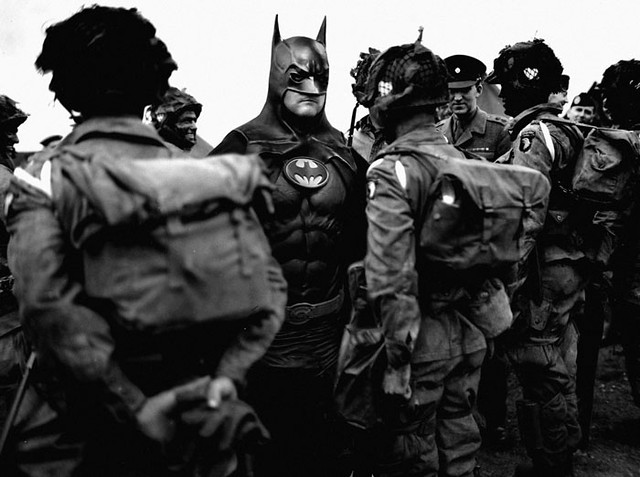
Greenham Airfield,June 5, 1944
He gives the order of the Day : 'Full victory-nothing else !' to paratroopers in England, just before they board their airplanes to participate in the first assault in the invasion of the continent of Europe.
Greenham Common Airfield in England about on June 5, 1944
Greenham Common Airfield in England about on June 5, 1944
Mar 25, 2011
interesting...

A novelization of the “lost” Doctor Who serial “Shada”, scripted by Hitchhiker’s Guide to the Galaxy author Douglas Adams in 1979, will be published next year, the Guardian reports:
Adams wrote three series of Doctor Who in the late 1970s, when he was in his twenties and The Hitchhiker’s Guide to the Galaxy was first airing as a BBC radio comedy. “Shada” was intended as a six-part drama to finish off the 17th season, with Tom Baker in the role of the Doctor.Bonus clip: Andrew Orton’s animation on the Daleks, inspired by Adams’s Hitchhiker’s Guide
The story features the Time Lord coming to Earth with assistant Romana (Lalla Ward) to visit Professor Chronotis, who has absconded from Gallifrey, the Doctor’s home planet, and now lives quietly at Cambridge college St Cedd’s. (The Doctor: “When I was on the river I heard the strange babble of inhuman voices, didn’t you, Romana?” Professor Chronotis: “Oh, probably undergraduates talking to each other, I expect.”)
Chronotis has brought with him the most powerful book in the universe, The Worshipful and Ancient Law of Gallifrey - which, in a typical touch of Adams bathos, turns out to have been borrowed from his study by a student. Evil scientist Skagra, an escapee from prison planet Shada, is on its trail.
Large parts of the story had already been filmed on location in Cambridge before industrial action at the BBC brought production to a halt. The drama was never finished, and in the summer of 1980 “Shada” was abandoned – although various later projects attempted to resurrect it.
Douglas Adams’s Doctor Who series are among the very few which have never been novelised, reportedly because the author wanted to do them himself but was always too busy. Gareth Roberts, a prolific Doctor Who scriptwriter, has now been given the job.
Publisher BBC Books declared the book “a holy grail” for Time Lord fans. Editorial director Albert De Petrillo said: “Douglas Adams’s serials for Doctor Who are considered by many to be some of the best the show has ever produced. Shada is a funny, scary, surprising and utterly terrific story, and we’re thrilled to be publishing the first fully realised version of this Doctor Who adventure as Douglas originally conceived it.”
Ed Victor, the literary agent representing the Douglas Adams estate, said: “The BBC have been asking us for years [to allow a novelisation of Shada] and the estate finally said, ‘Why not?’” Having Roberts novelise the Adams script was “like having a sketch on a canvas by Rubens, and now the studio of Rubens is completing it,” he added. The book will be published in March 2012 as a £16.99 hardback.
Adams died in 2001, and a posthumous collection of his work, including the unfinished novel The Salmon of Doubt, was published the following year. A Hitchhiker’s Guide followup, And Another Thing…., written by Eoin Colfer, was published in 2010, but Victor said there were “no plans at the moment” for more such sequels.
Mar 21, 2011
man, that about sums it up...

John Scalzi's Epublishing Bingo card captures nearly every tedious talking point from nearly
Mar 20, 2011
should have known better...
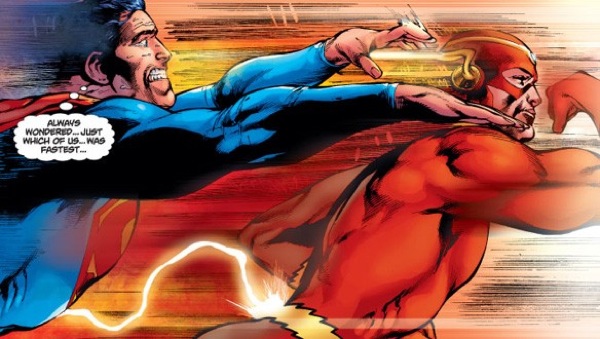
DC Comics apparently shut down commenting on its blog The Source after things got ugly in a thread about an eternal question: Who runs faster, Superman or The Flash? "DC's Blog Closes Comments, Gives Up On Even Trying To Talk to You Jerks"
Mar 18, 2011

hard core....
From The Atlantic's archives, a harrowing 1961 account of a Soviet surgeon on a primitive Antarctic base who had to remove his own appendix, stopping frequently as he battled vertigo and blood loss:
I worked without gloves. It was hard to see. The mirror helps, but it also hinders -- after all, it's showing things backwards. I work mainly by touch. The bleeding is quite heavy, but I take my time -- I try to work surely. Opening the peritoneum, I injured the blind gut and had to sew it up. Suddenly it flashed through my mind: there are more injuries here and I didn't notice them ... I grow weaker and weaker, my head starts to spin. Every 4-5 minutes I rest for 20-25 seconds. Finally, here it is, the cursed appendage! With horror I notice the dark stain at its base. That means just a day longer and it would have burst and ... At the worst moment of removing the appendix I flagged: my heart seized up and noticeably slowed; my hands felt like rubber. Well, I thought, it's going to end badly. And all that was left was removing the appendix ... And then I realised that, basically, I was already saved
Mar 16, 2011
what the hell is this?

Armchair, 2009, mixed media, 7cm x 8cm x 8cm @Jessica Harrison. Courtesy of the artist.
The use of what seems like the corporal as material is shocking and allows us to reconsider our relationships with the familiar. Take, for example, an armchair
finally, something to wear with my summer weight seersucker.....

A bookmaker called Betfair has released a line of synthetic hoof-shoes as a charity fundraiser. They cost £1,300 a pair, and sport carbon fibre hooves with horsehair uppers.
Mar 14, 2011
very cool....
 They made a Cuban pork sandwich that looks like a Cuban cigar. "We take the spices that go into the pork shoulder and fashion that into ash," said Cantu." We take the sandwich and wrap it up into a collard green" and add an edible cigar band. "We put it in a $1.99 ashtray and charge you about 20 bucks for it."
 Mar 13, 2011
does anyone doubt that this dude does some strange sh** late at night when his blinds are drawn...
 Conservative pundit George Will offered a remarkable turn of phrase in his analysis of presidential candidate Mick Huckabee's recent political dog-whistling.
...sensible Americans, who pay scant attention to presidential politics at this point in the electoral cycle, must nevertheless be detecting vibrations of weirdness emanating from people associated with the party. The most recent vibrator is Mike Huckabee, the former governor of Arkansas who won the 2008 Republican caucuses in Iowa and reached that year's national convention with more delegates than Mitt Romney, and who might run again.
Mar 9, 2011
got to love this guy, for sheer balls if nothing else...

Of course it was, Newt. We’re all that fucking stupid…
Watch in amazement as cretinous, hypocritical blow-hard Newt tries to wiggle out of his past—and widely known—“indiscretions” with this ridiculously preposterous, transparently obvious attempt to connect with Christian votes on CBN. Where else does a Republican sinner go for absolution?
“There’s no question at times of my life, partially driven by how passionately I felt about this country, that I worked far too hard and things happened in my life that were not appropriate,” said Gingrich. “And what I can tell you is that when I did things that were wrong, I wasn’t trapped in situation ethics, I was doing things that were wrong, and yet, I was doing them.What a complete farce. This man’s unbelievable (in every sense) hubris is a gift to the nation’s comedians and satirists. The only good thing—besides the yucks—of a Newt Gingrich candidacy is that he’ll be soaking up political donation$ on the right with his no-hope presidential run.
“I found that I felt compelled to seek God’s forgiveness. Not God’s understanding, but God’s forgiveness. I do believe in a forgiving God. And I think most people, deep down in their hearts hope there’s a forgiving God. Somebody once said that when we’re young, we seek justice, but as we get older, we seek mercy. There’s something to that, I think.
“I feel that I’m now 67 I’m a grandfather. I have two wonderful grandchildren. I have two wonderful daughters and two great sons in law. Callista and I have a great marriage. I think that I’ve learned an immense amount. And I do feel, in that sense, that God has given me, has blessed me with an opportunity as a person.”
cool....

Tom Hardwidge's Arthrobots are sculptural steampunk insectoid junkbots made from spent ammunition polished to a mirror shine. They're lovely, detailed and delicate
Mar 8, 2011
tough economy

Pawel Hynek's 2006 image "Obsolete" depicts a homeless robot begging for electrical power; it's striking and funny as well as a little uncomfortable-making. It reminds me of one of the most demented scenes in science fiction history: the moment in Ian McDonald's stupendous novel The Broken Land in which a re-animated severed head is reduced to performing sexual favors on a street-corner in exchange for nutrient bath to fill the shallow dish in which its neck-stump rests.
Obsolete (via JWZ)
Mar 7, 2011
America is not broke.

Contrary to what those in power would like you to believe so that you’ll give up your pension, cut your wages, and settle for the life your great-grandparents had, America is not broke.
Today just 400 Americans have more wealth than half of all Americans combined.
Let me say that again. 400 obscenely rich people, most of whom benefited in some way from the multi-trillion dollar taxpayer “bailout” of 2008, now have more loot, stock and property than the assets of 155 million Americans combined. If you can’t bring yourself to call that a financial coup d’état, then you are simply not being honest about what you know in your heart to be true.
And I can see why. For us to admit that we have let a small group of men abscond with and hoard the bulk of the wealth that runs our economy, would mean that we’d have to accept the humiliating acknowledgment that we have indeed surrendered our precious Democracy to the moneyed elite. Wall Street, the banks and the Fortune 500 now run this Republic—and, until this past month, the rest of us have felt completely helpless, unable to find a way to do anything about it
Michael Moore
I don't think I like this....
Alcon Entertainment, producers of the Blind Side and The Book of Eli, own the rights to make a prequel or sequel to Blade Runner. They seemingly haven't gotten much further than that. From Entertainment Weekly:
“We have some ideas that we’re not in a position to discuss yet,” Andrew Kosove, Alcon’s co-CEO, teases to EW. “But from our point of view, the thematic core of the original movie — what does it mean to be a human being? — is even more relevant today than it was when the film came out. After all, we’re living in the industrial age of technology.” Kosove and his fellow CEO, Broderick Johnson, are partnering on the project with Bud Yorkin, one of the producers of the original film. “That picture turned out so well — it’s just been selected for preservation by the Library of Congress — that for a long time I was afraid to try to make another one,” Yorkin says. “But now seems like the perfect time. We just need to find the right writer and director
Subscribe to:
Posts (Atom)