This sacrelicious Tokyo subway poster shows Jesus and his posse confronted by the awful spectacle of umbrellas forgotten on the train. It's part of a larger (and equally delightful) series linked below


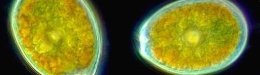
Discovered in the poisonous Mono Lake, California, this bacteria is made of arsenic, something that was thought to be completely impossible. While she and other scientists theorized that this could be possible, this is the first discovery. The implications of this discovery are enormous to our understanding of life itself and the possibility of finding beings in other planets that don't have to be like planet Earth.One of the scientists set to speak at the conference today, Felisa Wolfe-Simon, had written a paper "Did Nature also choose arsenic?" earlier this year wondering if that element could also be a foundation for life:
We hypothesize that ancient biochemical systems, analogous to but distinct from those known today, could have utilized arsenate in the equivalent biological role as phosphate. Organisms utilizing such 'weird life' biochemical pathways may have supported a 'shadow biosphere' at the time of the origin and early evolution of life on Earth or on other planets.
Such organisms may even persist on Earth today, undetected, in unusual niches.
She points out that Mono Lake arsenic life, if found, may only go as far as proving the extreme adaptability of life on Earth billions of years ago. It is generally agreed that on early Earth the chemical soup was very different because of the material being thrown out of the planet's depths by volcanoes and hydrothermal vents and the lack of biologically derived oxygen. If arsenic was around in far greater concentrations then, perhaps "arsenolife", as she calls it, in Mono Lake is evidence of that ancestral life, a finding that would deepen our understanding of how life on Earth got started.There will be other scientists at the news conference. Jason Kottke gives a rundown on each of them and their expertise here.

The Cabinet Office recently announced that an estimated 696,000 youths nationwide are hikikomori, shutting themselves inside their homes for six months or longer. According to the same report, 1.55 million youths claimed they could sympathize with the inclination to isolate oneself from society. It looks like for the time being, the government will claim the official figure for hikikomori as approximately 700,000.Over the years, there have been many reports of Hikikomori sufferers becoming violent. In 2000, “a 17 year old hikikomori sufferer left his isolation and hijacked a bus, killing a passenger. Another kidnapped a girl and held her captive in his bedroom for nine years.”
In reality, the estimated population of hikikomori varies from year to year. According to Health, Labor and Welfare Ministry surveys conducted between 2002 and 2005, the number of affected households was an estimated 410,000 in the first year. The number continued to fall in subsequent years, with a 2005 figure of 260,000 households.


Since 1980, at least 150 men and women have been stoned to death in Iran, said Farshad Hoseini, head of the International Committee against Execution, who has compiled a report on the practice from media reports and human rights organizations. However, he cautions in the report, "It should be pointed out that obtaining a true and complete list of the victims is extremely difficult, if not totally impossible, due to the regime's systematic censorship of such news."
He added, "Stoning in Iran is a political tool in the hands of an Islamic regime to oppress the society as a whole in one of the most savage ways. The overwhelming majority of the victims of stoning are women. Stoning in Iran is therefore a tool, among many such religious, oppressive tools, for keeping women in their