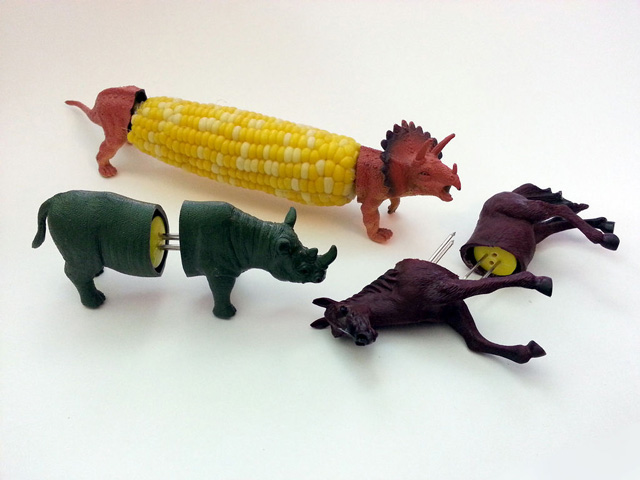
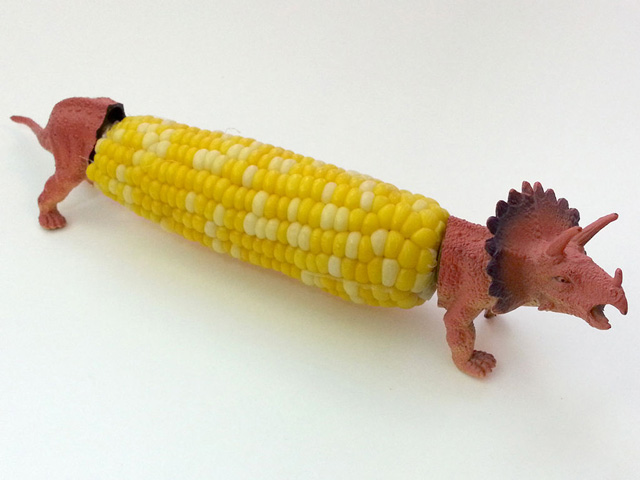
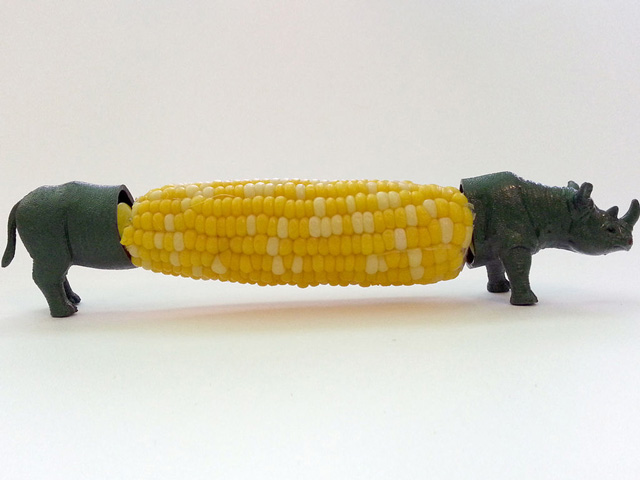
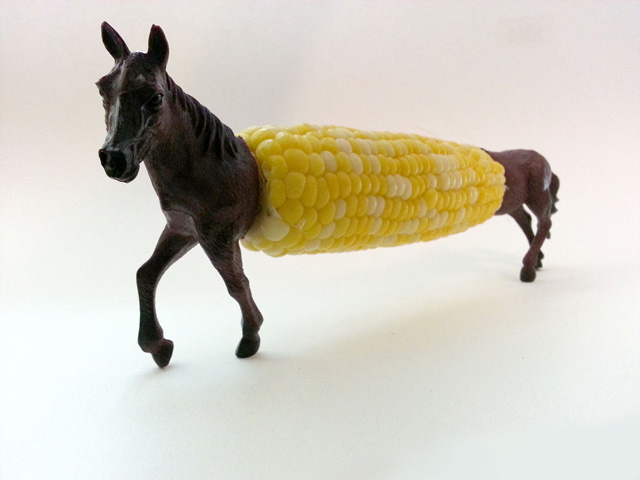
Using cheap plastic animal toys, Instructables’ play editor and community manager Mike Warren created super cute corn on the cob holders. He even cleverly designed the holders to reconnect when not poking corn (tutorial).
via

 Charles Darwin, Linus Pauling, and Albert Einstein made great contributions to science. They also made large blunders. In this original essay Mario Livio, astrophysicist at the Space Telescope Science Institute, and author of the new book Brilliant Blunders: From Darwin to Einstein - Colossal Mistakes by Great Scientists That Changed Our Understanding of Life and the Universe,
 Photo: Verizon Can Hear You Now, a Creative Commons Attribution (2.0) image from 60976844@N00's photostream, shared in the Boing Boing Flickr Pool.
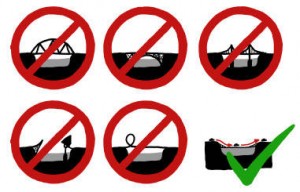
Reduced risk of solar flares: In 1859, a massive solar flare and geomagnetic storm hit the Earth.[1] Magnetic storms induce electric currents in wires. Unfortunately for us, by 1859 we had wrapped the Earth in telegraph wires. The storm caused powerful currents in those wires, knocking out communications and in some cases causing telegraph equipment to catch fire.[2] Since 1859, we've wrapped the Earth in a lot more wires. If the 1859 storm hit us today, the Department of Homeland Security estimates the economic damage to the US alone would be several trillion dollars[3]—more than every hurricane which has ever hit the US combined.[4] If the Sun went out, this threat would be eliminated. Improved satellite service: When a communications satellite passes in front of the Sun, the Sun can drown out the satellite's radio signal, causing an interruption in service.[5] Deactivating the Sun would solve this problem. Better astronomy: Without the Sun, ground-based observatories would be able to operate around the clock. The cooler air would create less atmospheric noise, which would reduce the load on adaptive optics systems and allow for sharper images. Stable dust: Without sunlight, there would be no Poynting–Robertson drag, which means we would finally be able to place dust into a stable orbit around the Sun without the orbits decaying. I’m not sure whether anyone wants to do that, but you never know. Reduced infrastructure costs: The Department of Transportation estimates that it would cost $20 billion per year over the next 20 years to repair and maintain all US bridges.[6] Most US bridges are over water; without the Sun, we could save money by simply driving on a strip of asphalt laid across the ice.
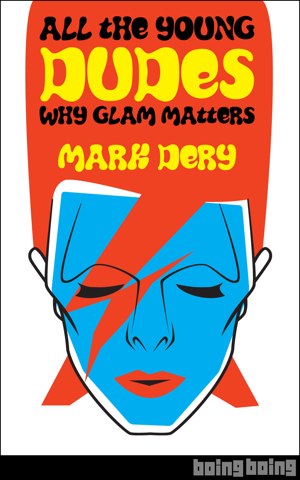 “All the Young Dudes,” glam rock’s rallying cry, turned 40 last year. David Bowie wrote it, but Mott the Hoople owned it: their version was, and will ever remain, glam’s anthem, a hymn of exuberant disenchantment that also happens to be one of rock’s all-time irresistible sing-alongs.



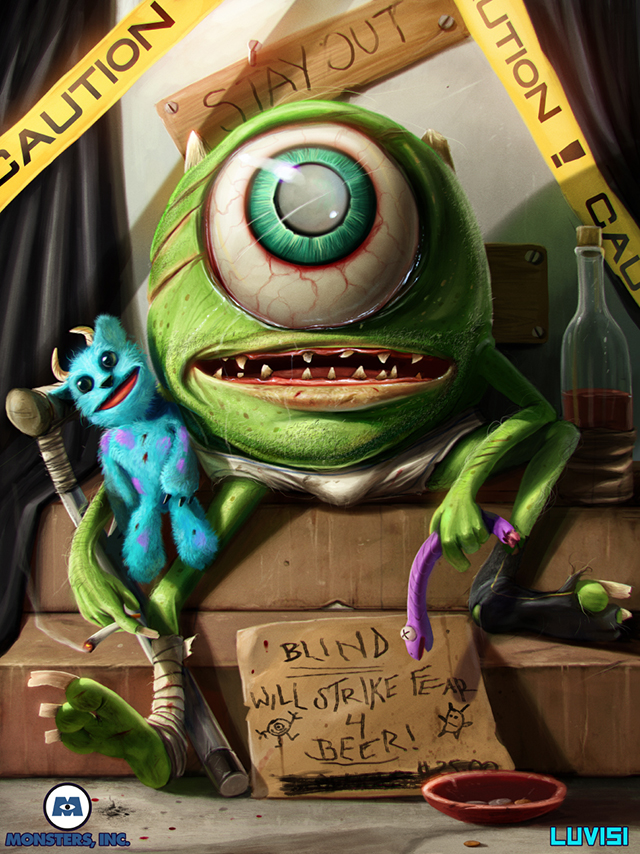
After Boo was saved, Sully and Mike realized they no longer required scares for cash, thus forcing Mike into a new line of business; comedy.
As Mike continued his stand-up routine with the children in hopes for laughs, Sully partied and wasted money that he didn’t have. The problem is: the world didn’t care, it was Sully, a hero and role model. And everyone loves Sully. Everyone but the one living in his shadow.
Mike was tired of it. Tired of lowering himself to telling jokes, only to hurt himself in the process over, and over again. Mike decided to have a talk with Sully about it, but was continuously avoided. Angered, Mike followed Sully one day, only to realize he was headed for the home of Mike’s girlfriend, Celia.
Mike rushed home, shocked to find the two talking. His anger got the best of him and he attacked Sully. Out of defense, Sully struck Mike, catching his one-eye. Out of confusion and anger, Mike launched his nimble body into Sully, peircing him with his horns, killing him.
As Sully laid dead on the floor, Celia screamed, blaming Mike for the death of him
 •
• 

The scaffold was made of a bioresorbable material, polycaprolactone, so it would dissolve and be absorbed by the body after about three years. At this point, his airways should be fully developed and no longer need the stent. The doctors used high-resolution X-ray scans of one of Kaiba's healthy windpipes to design a computer model for the life-saving brace. Laser-equipped 3-D printers crafted the device in a few hours, and the university obtained emergency clearance from the U.S. Food and Drug Administration to implant it on February 9, 2012 at C.S. Mott Children's Hospital in Ann Arbor. "It was amazing. As soon as the splint was put in, the lungs started going up and down for the first time and we knew he was going to be OK," said Green.